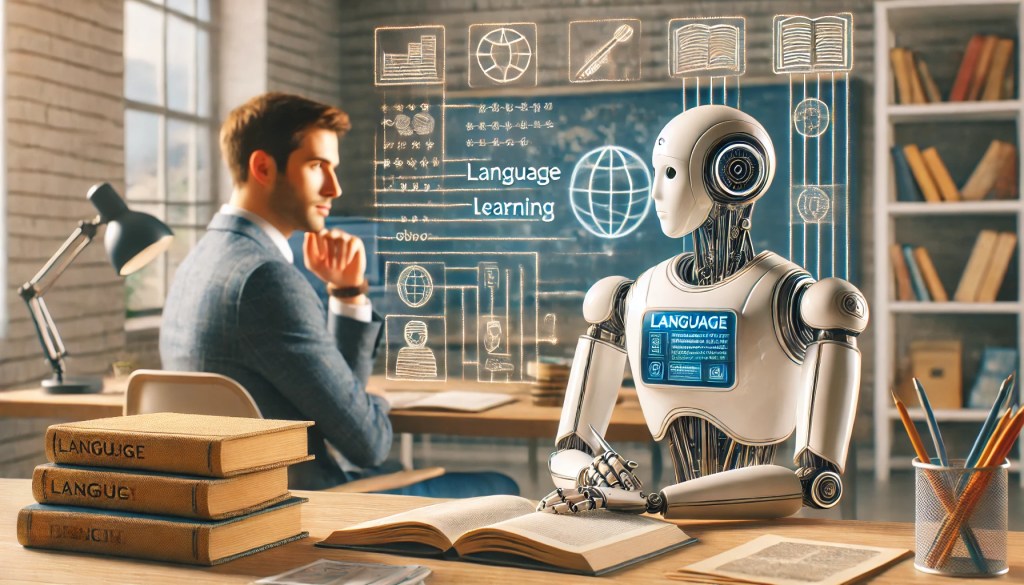
A Linguistic Paradigm Inspired by Physics and Genetics
I’ve been exploring an approach to understanding language evolution, drawing inspiration from my background in physics and my work with DNA analysis at Borland Genetics. While the models of particle physics and DNA analysis aren’t direct parallels to the model of language, this approach offers an innovative way to analyze and model linguistic changes and interactions.
The Concept: Language as Quantum Scattering
Imagine language as a stream of quantum particles, where each particle represents a unit of language—this could be a word, pronunciation rule, syntactical property, or any other linguistic feature. These language quanta interact with a field of quantum-level objects, each with specific possible states.

The resulting interactions can be categorized as absorptions, reflections, or emissions, similar to how quantum particles behave in interactions with other particles.
Language Evolution: Interactions and Innovations
On a micro level, language is the means by which an individual converts thoughts into communicable utterances. An individual’s language is like a genome of quantized linguistic elements that comprise the individual’s language at any given point in time. These linguistic quanta are scattered through interactions with other individuals throughout life. Early interactions, such as those with parents, tend to result in absorption, where the child adopts language features from their parents. Later interactions, like those with peers, often involve reflection, where language features are exchanged and modified through the lens of the speaker. Additionally, language features can be transmitted resulting in absorption or reflection by the receiving party.
In addition to these interactions, language evolves through innovations analogous to genetic mutations. These can occur independently of linguistic collisions. For instance, new words may emerge to describe new subjects via innovation of a single speaker or interactions between a small group of speakers, or unique pronunciation patterns may develop due to individual speech differences.
Modeling Language: From Individual to Population
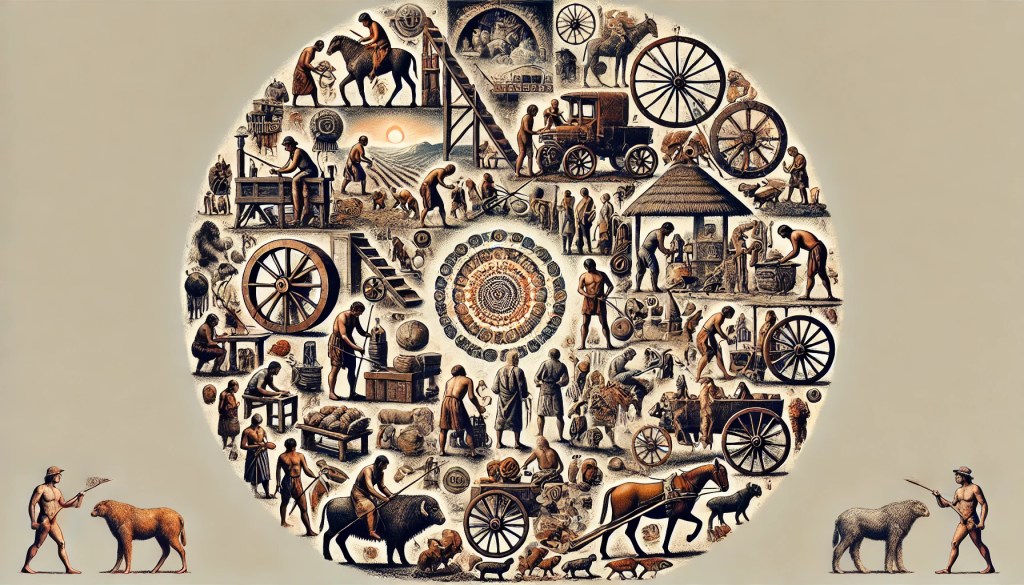
The state of an individual’s language is dynamic, shaped by a lifetime of interactions. Initially influenced by parents, then friends, and eventually becoming a potential vector for transmitting new or existing linguistic features to others. Some innovations might be adopted widely if deemed clever or efficient, while others may remain isolated.
By using this model, we can better understand the macro-relationships between languages, defined by norms of communication within populations rather than individual speech patterns. This approach involves:
- Defining Quantized Properties of Languages: Defining the individual quantum features of communication that can either take discrete values (like grammatical cases) or values along a spectrum (like the pronunciation of vowels).
- Classifying Types of Interactions and Mutations: Learning, borrowing, misunderstanding, influencing, vowel shifts, and other processes. These interactions can be visualized similarly to Feynman diagrams, which interpret the input and output of interactions through hypothetical internal transactions.
- Explaining Linguistic Evolution: Describing how these micro processes explain our current macro linguistic state and anthropological history. This is similar to the leap between physics and chemistry, chemistry and biology, or physics and biology.
Conclusion: A New Framework for Linguistic Analysis
By applying this micro framework, we might gain new insights into how languages evolve, spread, and influence each other over time at the macro level. This approach offers a novel perspective on understanding language dynamics and the factors that shape them.
 My AI Lifestyle
Leave a comment